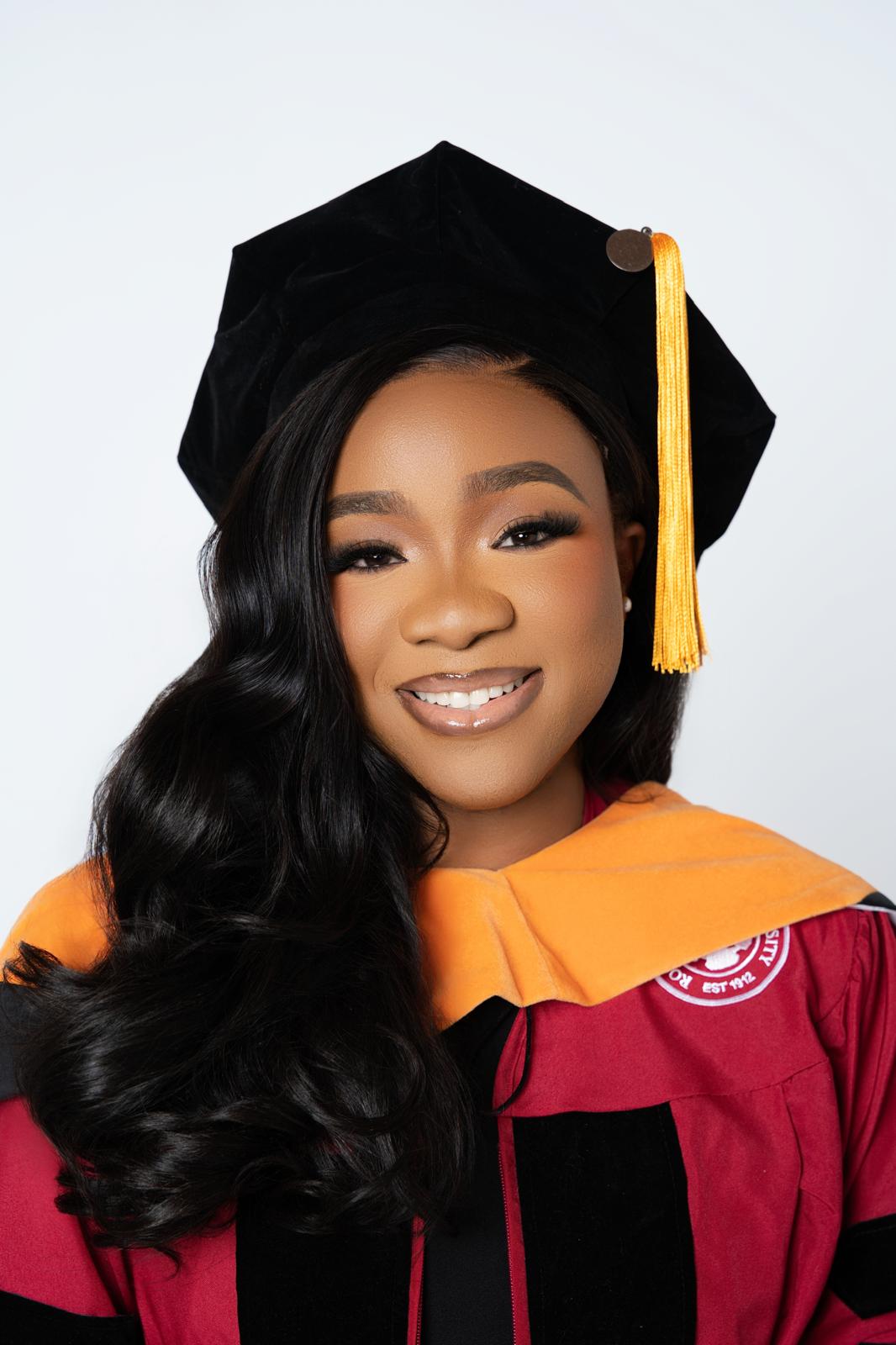
There's a saying: immigration strips you down to the basics.
Your name sounds different. Your language falters. Your confidence shrinks. You are forced to rebuild yourself piece by piece in a place that doesn't know who you used to be.
I was 17 when I left Benin City, Nigeria. I'd been in medical school. I spoke English fluently. I thought I was prepared.
I wasn't.
The Girl Who Used to Be
In Nigeria, I grew up surrounded by one of the richest cultures in tradition and custom. Benin City is known for that — strong family ties, respect for elders, pride in our history. Both my parents are from Benin, so I was immersed in it at home and in my community.
I was a dancer. A student. A girl with plans. I was a semi-finalist at Nigeria's Got Talent in 2012. I was in medical school at 17. I knew exactly who I was.
Then I boarded a plane to Dallas, Texas to join my father, and none of that came with me.
Starting From Zero
I arrived with zero savings. My sister and I shared a one-bedroom in my dad's house and a Ford Focus between us. The living conditions weren't great, but I couldn't complain — I knew it could be worse.
Although I spoke English fluently back home, adjusting to a new accent, new tone, and new way of communicating was its own challenge. Even now, I still find myself pronouncing certain words differently. That familiarity with the language made some things easier, but it didn't remove the work of adapting.
At 18, I started working as a CNA at one of the worst nursing homes in Dallas. While many of my friends were out partying on weekends, I was working 16-hour double shifts on Saturdays and Sundays, then going to school during the week.
That's where my discipline was forged. Not in a classroom. In the hallways of a facility most people wouldn't last a week in.
What I Wish People Understood
A big misconception about immigrants is that opportunity alone guarantees success. It doesn't. Opportunity still requires sacrifice, discipline, and resilience — often more than people realize.
Some of the hardest parts are invisible — feeling like you have to work twice as hard to be taken seriously. Carrying responsibility not just for yourself but for your family. The quiet pressure to succeed because failure feels like letting everyone down.
But here's the unexpected joy: you realize how strong you become. Immigration teaches you adaptability, confidence, and perspective. You learn how to build from nothing, appreciate progress, and celebrate growth in ways that are deeply meaningful.
The Woman Who Emerged
My father was a dentist in Nigeria. When he relocated to the U.S., he became a nurse. That career shift showed me the value of humility, adaptability, and perseverance before I ever experienced it myself.
I took that lesson and ran with it. From CNA to medication aide to patient care technician to registered nurse to travel nurse to CRNA to — soon — psychiatric mental health nurse practitioner. Every step was built on the one before it.
Immigration didn't just strip me down. It forced me to rebuild. And the woman who emerged is stronger, more focused, and more intentional than the girl who boarded that plane.
If you're an immigrant woman reading this — whether you just arrived or you've been here for years — I want you to know: the rebuilding is the becoming. The woman on the other side of it is someone you haven't even met yet. And she's better than anything you left behind.